In previous sections, we learned how the unit circle is related to basic trigonometric functions (sine and cosine), and how to use this relationship to evaluate trigonometric functions. In this section, we will see that we are not limited to positive angles less than \(2\pi\text{.}\) We can use the information we already learned in previous sections to evaluate trigonometric functions for any angle.
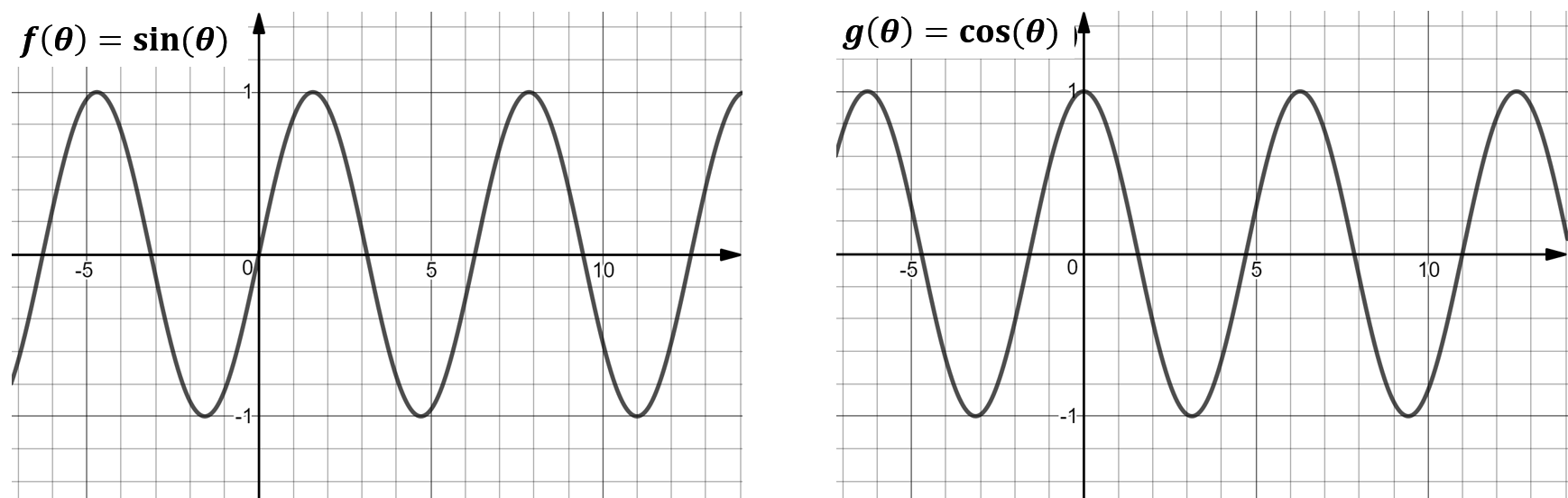
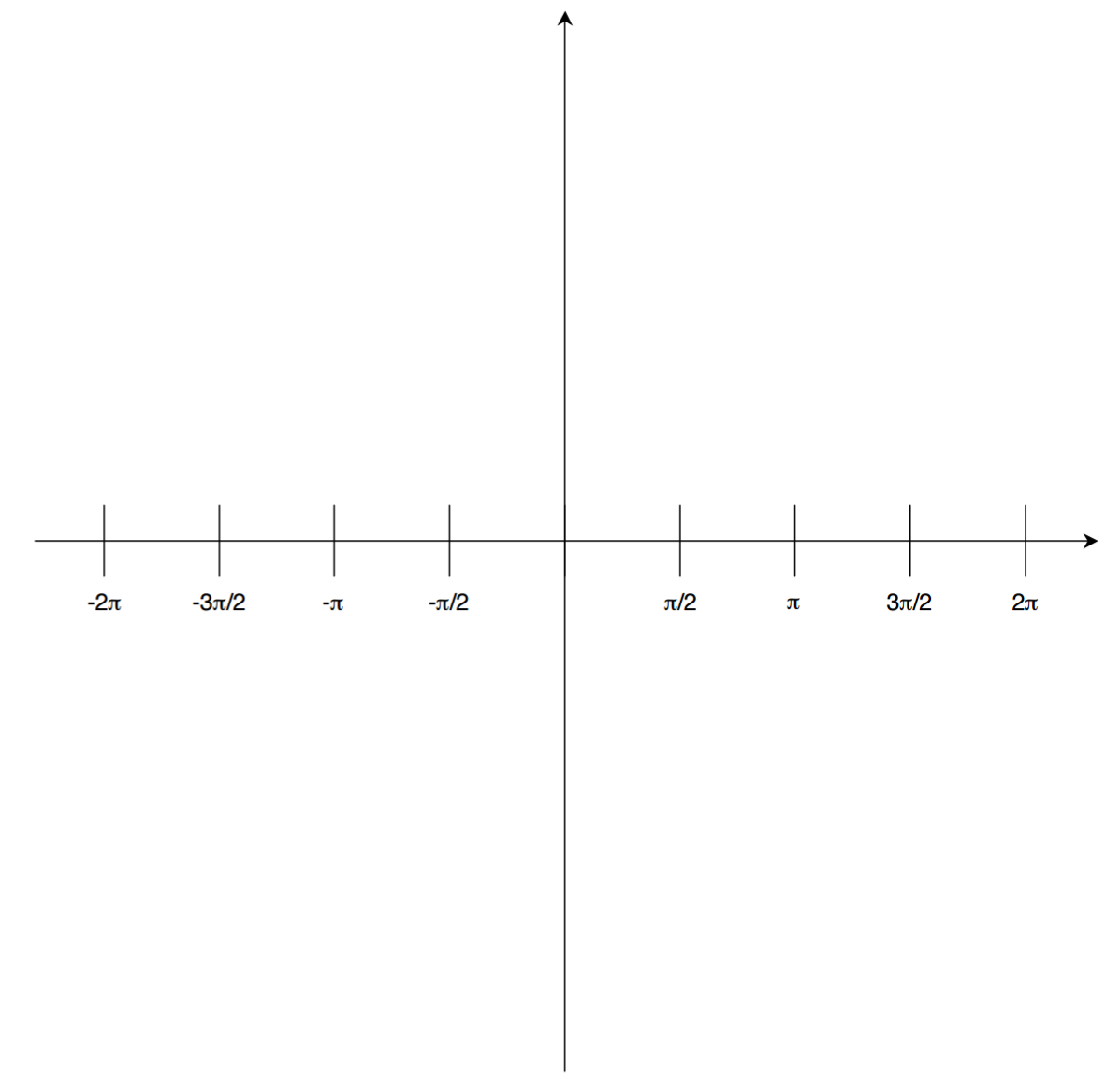
Explain how the graph of \(f(\theta)=\sin(\theta)\) shows that the value of sine is the same at \(\frac{\pi}{2}\text{,}\)\(-\frac{3\pi}{2}\text{,}\) and \(\frac{5\pi}{2}\text{.}\)
Explain how the graph of \(g(\theta)=\cos(\theta)\) shows that the value of cosine is the same at \(\frac{\pi}{2}\text{,}\)\(-\frac{3\pi}{2}\text{,}\) and \(\frac{5\pi}{2}\text{.}\)
Explain how to use these results to show that the value of tangent is undefined at \(\frac{\pi}{2}\text{,}\)\(-\frac{3\pi}{2}\text{,}\) and \(\frac{5\pi}{2}\text{.}\)
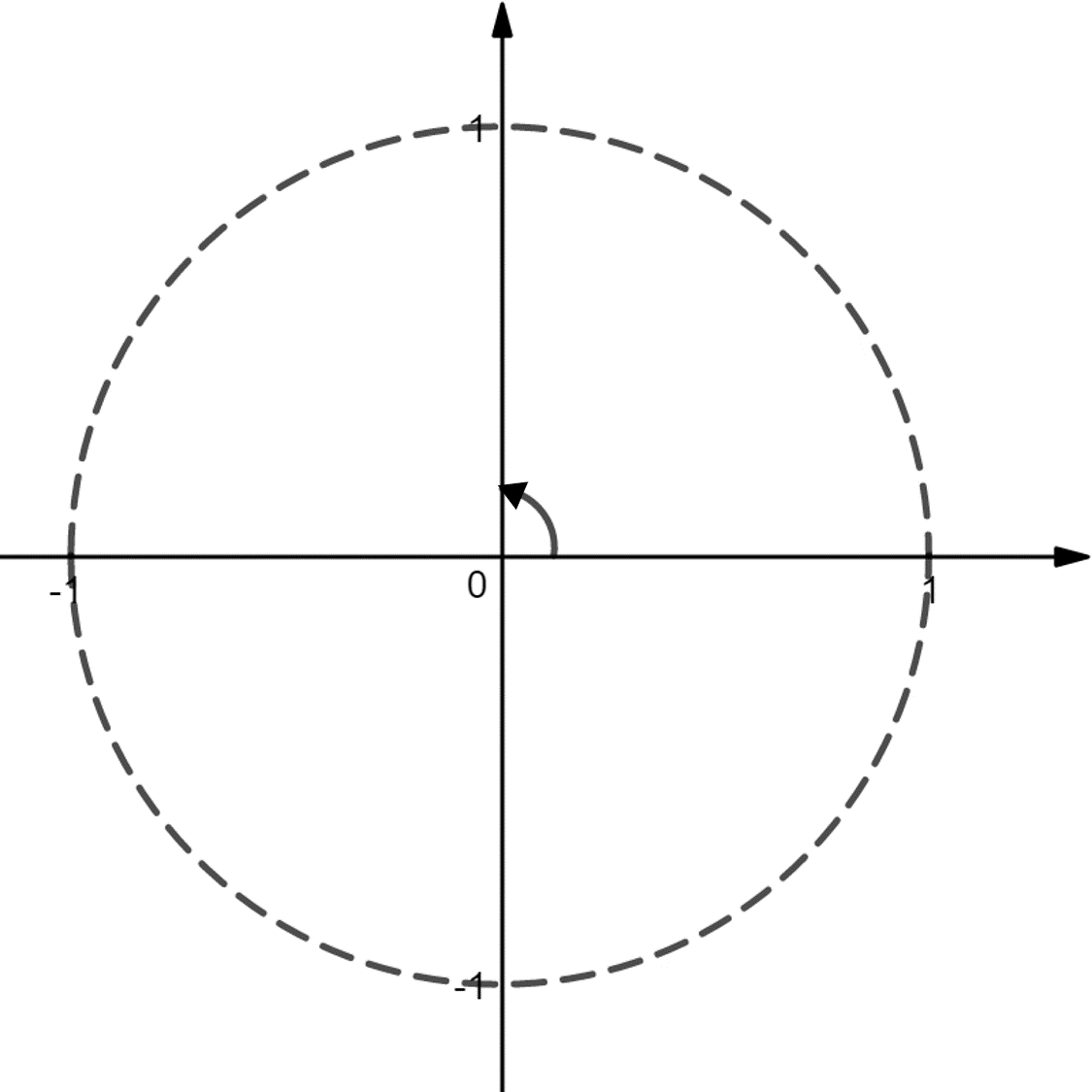
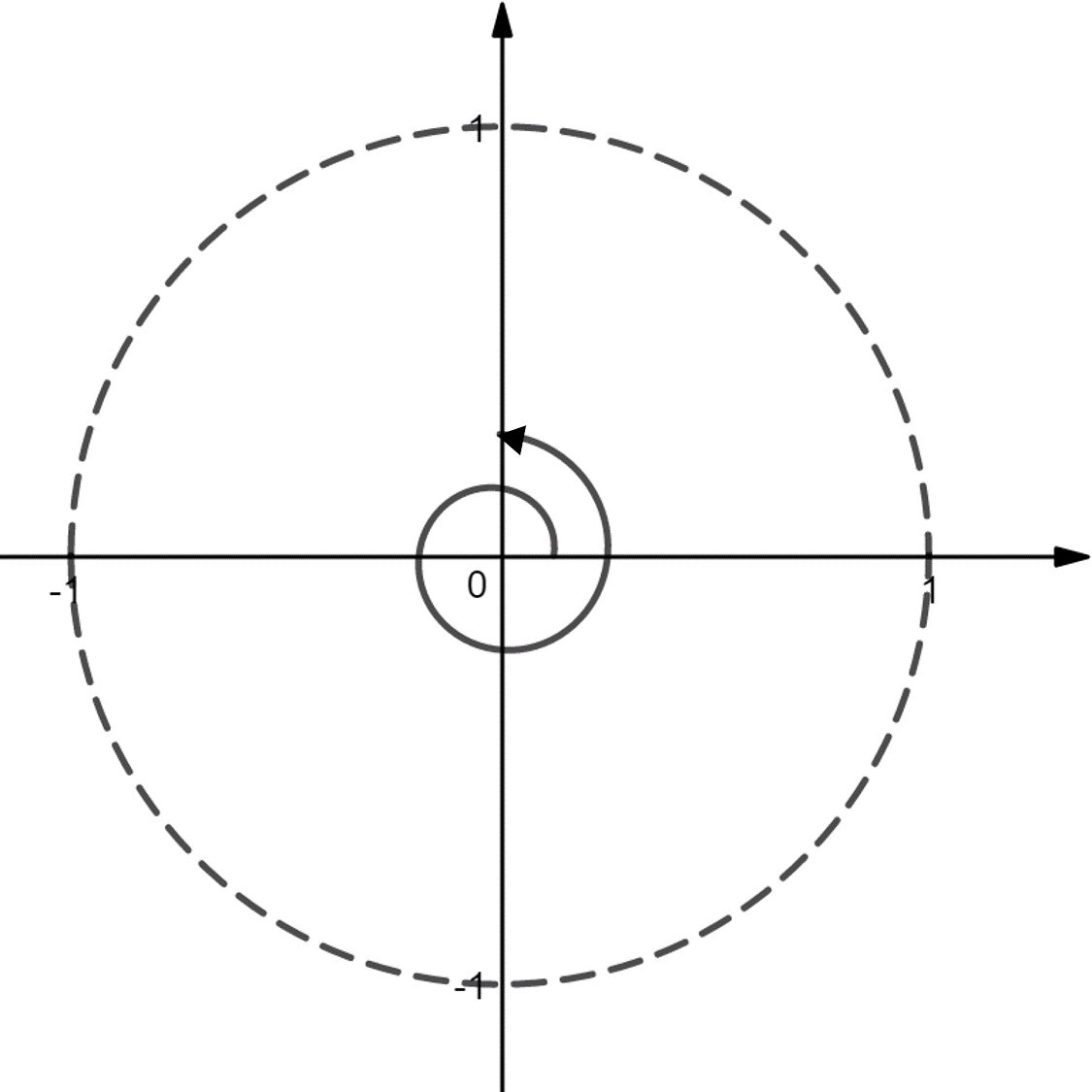
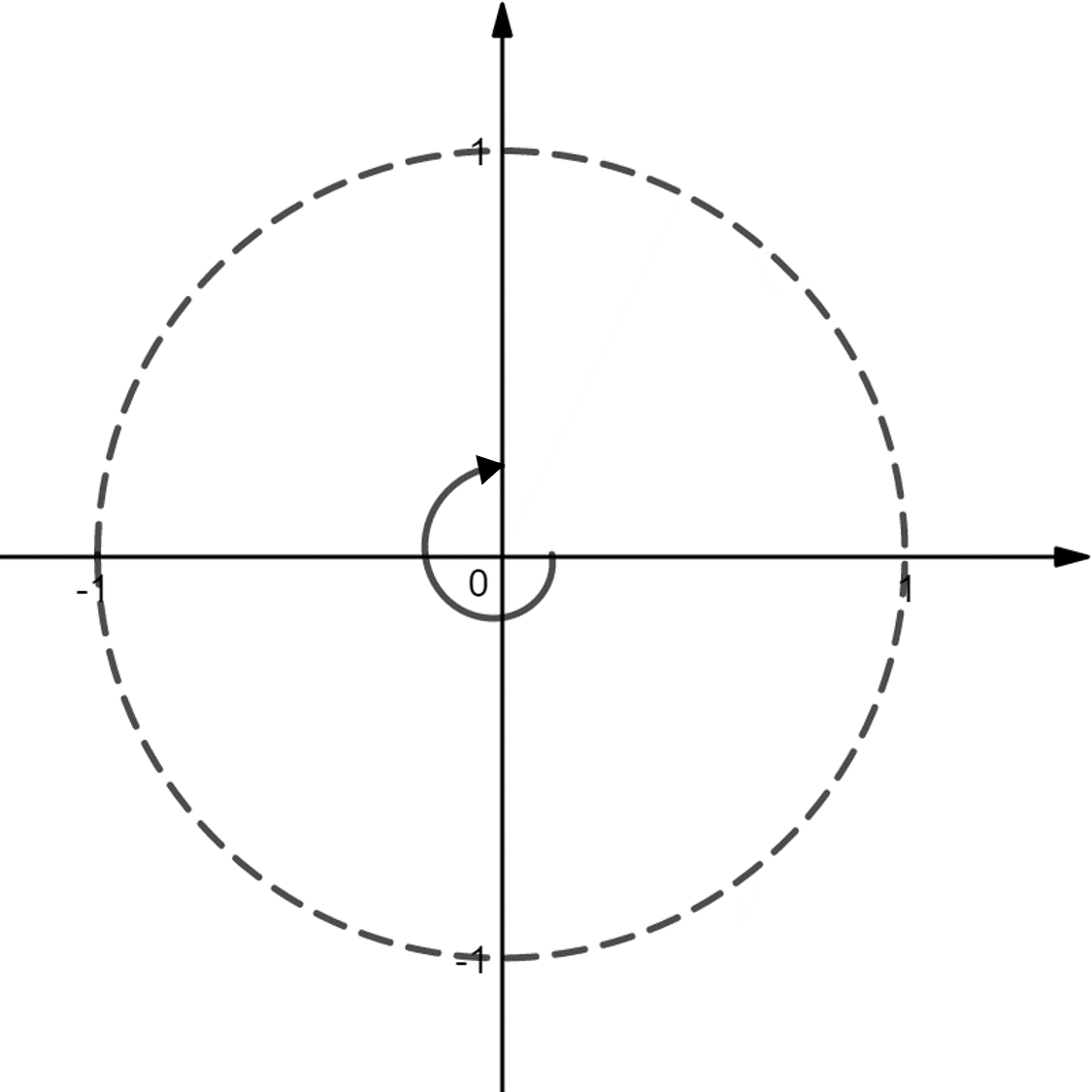
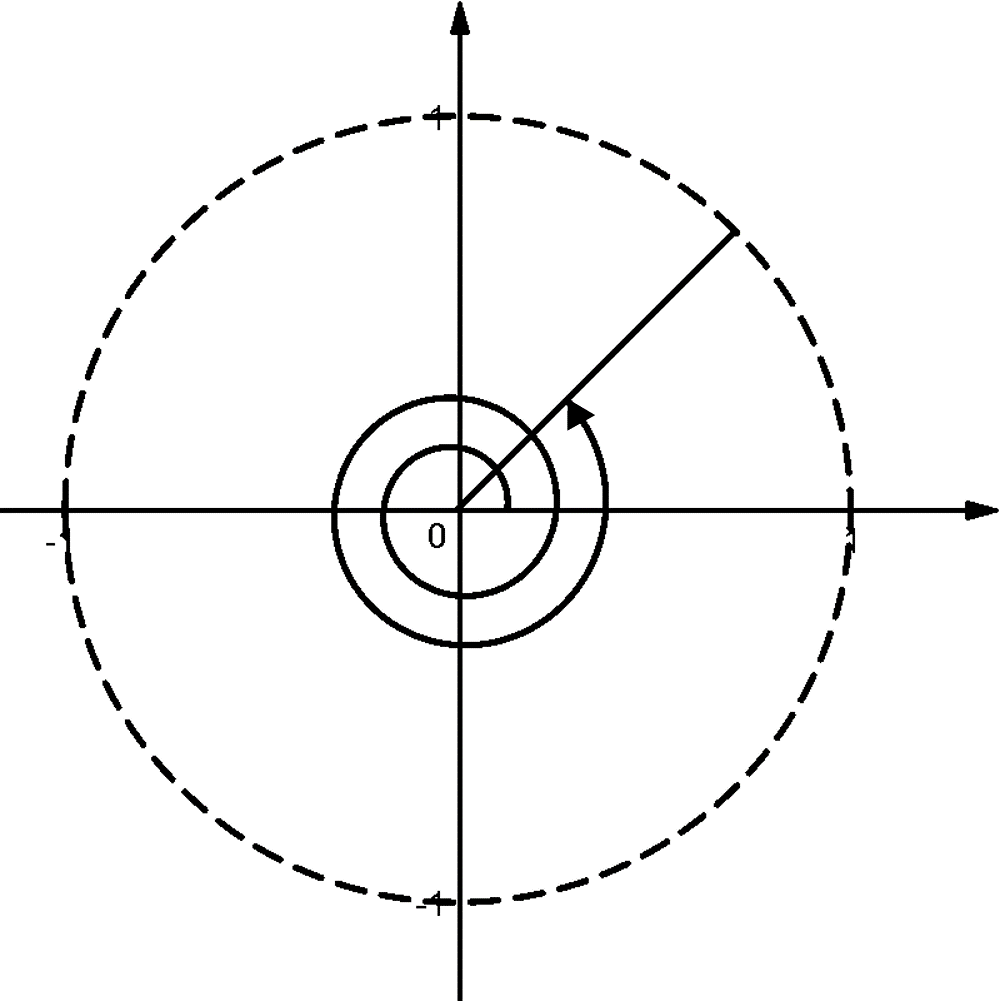
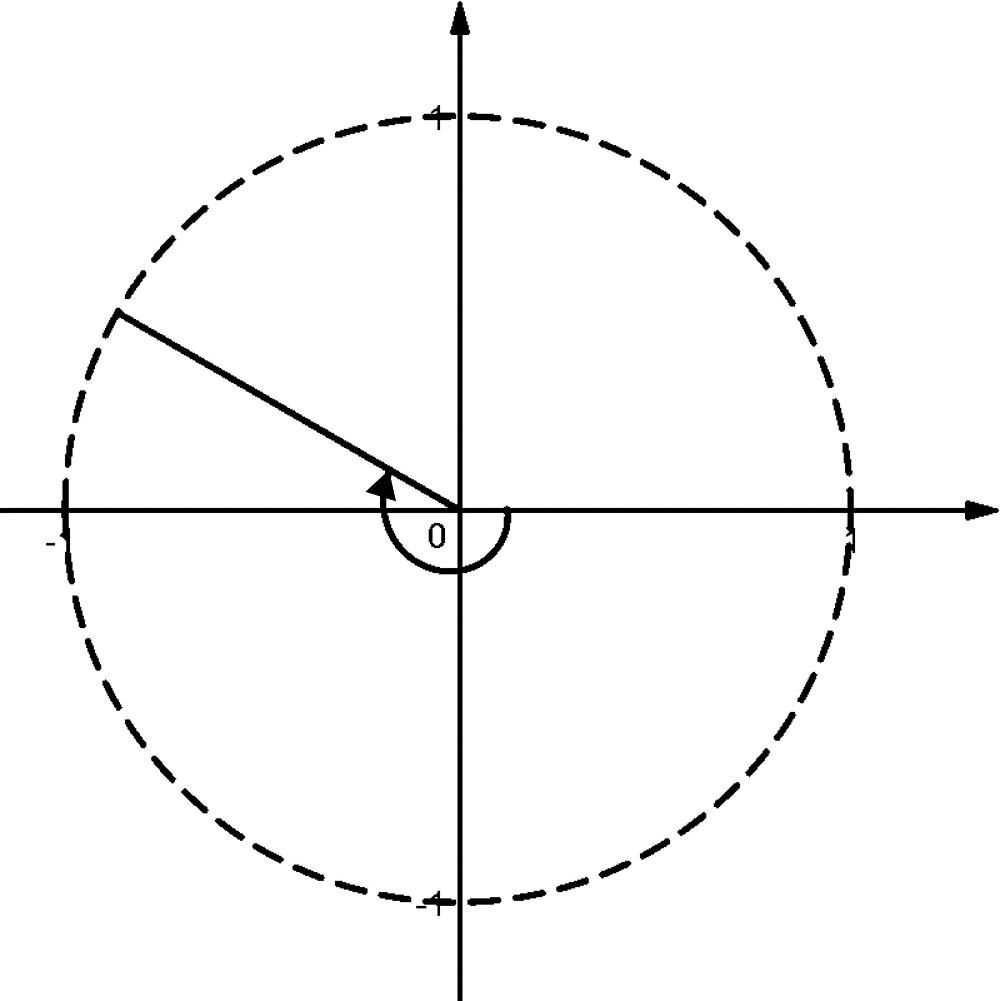
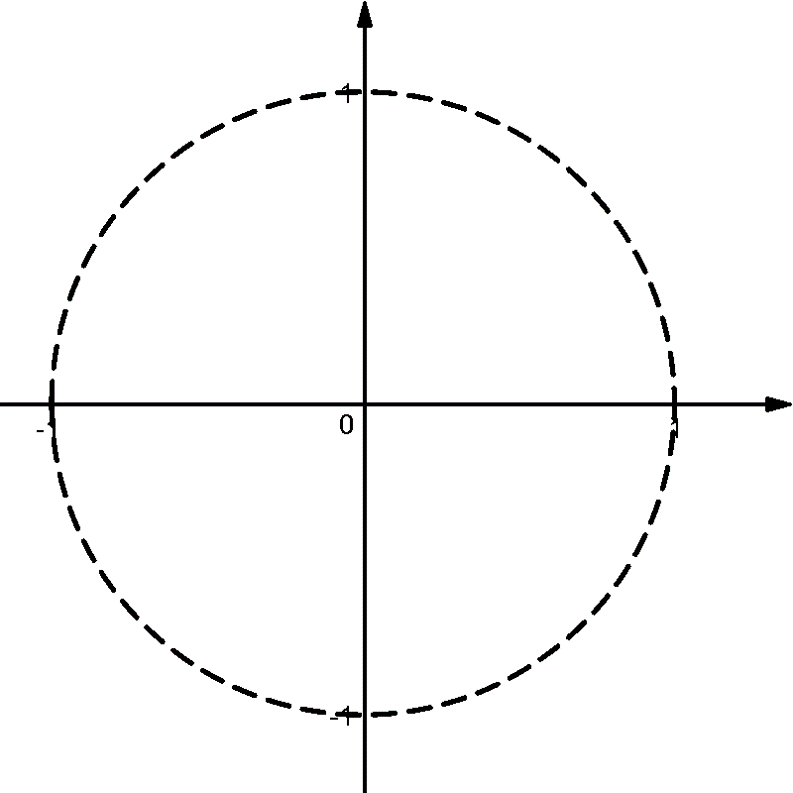
On the unit circle, positive angles are measured counterclockwise from the x-axis. Angles greater than \(2 \pi\) are measured by completing one complete rotation, and continuing past the x-axis. Negative angles are measured clockwise from the x-axis. Angles less than \(-2 \pi\) are measured by completing one complete rotation in the counterclockwise direction and continuing past the x-axis.
In addition to sine, cosine and tangent, there are several other trigonometric functions which are often used. They are cosecant, secant and cotangent, and are defined in terms of sine, cosine and tangent.
The cosecant function is \(\csc{x} = \frac{1} {\sin{x}}\text{.}\) Use Desmos to graph the cosecant function on the interval \((-2\pi\text{,}\)\(2\pi)\text{.}\)
The secant function is \(\sec{x} = \frac{1} {\cos{x}}\text{.}\) Use Desmos to graph the cosecant function on the interval \((-2\pi\text{,}\)\(2\pi)\text{.}\)
The cotangent function is \(\cot{x} = \frac{1} {\tan{x}}=\frac{\cos{x}}{\sin{x}}\text{.}\) Use Desmos to graph the cotangent function on the interval \((-2\pi\text{,}\)\(2\pi)\text{.}\)